Showing posts with label david l. katz. Show all posts

Friday, January 19, 2018

HuffPost axes columns by celebrity doctors Mehmet Oz, Deepak Chopra, Andrew Weil, Dean Ornish, Joel Fuhrman, Neal Barnard, David Katz and other MDs

Since its founding nearly 13 years ago, The Huffington Post has relied heavily on unpaid contributors, whose ranks included aspiring writers, citizen journalists and celebrities from the Rolodex of the site’s co-founder Arianna Huffington.

...On Thursday, it said it was immediately dissolving its self-publishing contributors platform — which has mushroomed to include 100,000 writers — in what is perhaps the most significant break from the past under its editor in chief, Lydia Polgreen...

(Recently) a contributor with the byline Waqas KH published an article about Felix Sater, an associate of President Trump, that he had been paid to post. The site has since deleted the article.
https://www.huffingtonpost.com/author/dr-sudip-bose

https://www.huffingtonpost.com/author/deepak-chopra
https://www.huffingtonpost.com/author/joel-fuhrman-md
https://www.huffingtonpost.com/author/mark-hyman
https://www.huffingtonpost.com/author/manoj-jain-md-mph
https://www.huffingtonpost.com/author/scott-kahan-md
https://www.huffingtonpost.com/author/kahn642-504
https://www.huffingtonpost.com/author/david-katz-md
https://www.huffingtonpost.com/author/dr-dean-ornish
https://www.huffingtonpost.com/author/dr-mehmet-oz
https://www.huffingtonpost.com/author/ipaulij-437
https://www.huffingtonpost.com/author/andrew-weil-md

Thursday, November 23, 2017

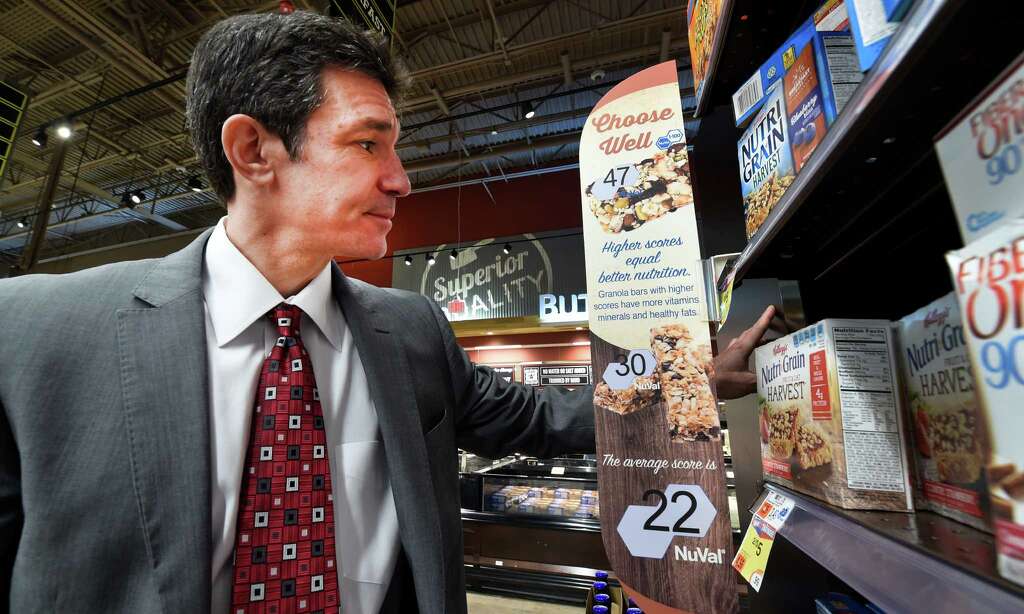
Why did the NuVal nutrition scoring system fail? A post mortem compendium of published opinions


The Rise and Fall of NuVal® Nutritional Guidance by David L. Katz MD MPH, Huffington Post, November 17, 2017:

There are two reasons the nutrient profiling system known as NuVal®, which assigned a score from 1 to 100, the higher the number the more nutritious the food, has disappeared from the shelves of the nearly 2,000 U.S. supermarkets it populated at its peak. The first reason is that the business model didn’t work; and the second is that the science of the system worked a bit too well.

You will get a very different impression if you read articles with titles such as “goodbye and good riddance.” But if you Google “NuVal” and read the more prominent disparagements of the system, you would readily find a theme if you looked. Identify the authors, or sources of derogatory comments- and Google them. Generally you will find they make and market highly processed junk food (which, of course, garners the low scores it deserves), or have ties to the beef industry- or they are personal trolls of mine.

...The main source of NuVal criticism is so-called “CPG,” or consumer packaged good companies- otherwise known as food manufacturers. Another is the “National Consumers League,” which sounds virtuous, but is actually a shell organization founded by those CPGs. This tactic is, apparently, standard operating procedure in propaganda wars. When the giants in the beverage industry wanted to oppose a soda tax in New York, for example, they created a new organization called “New Yorkers Against Unfair Taxes.” You had to dig to discover that soda companies were the exclusive sponsors and organizers.

...As for the science of NuVal, it has mostly failed because it works too well. The algorithm underlying the program was developed by a dozen diverse luminaries in nutrition- including past and current chairs of nutrition at the Harvard School of Public Health; the inventor of the glycemic index; the inventor of the volumetrics concept; and so on. I was privileged to lead the group, but every decision ran the gauntlet of consensus.

NCL welcomes nationwide removal of misleading nutritional scoring system from grocery shelves, National Consumers League press release, November 9, 2017:

The National Consumers League (NCL) has welcomed news that a supermarket-based nutritional scoring system of food products called NuVal, which at its peak was used in 1,600 grocery stores nationwide, has been discontinued. For the last five years, NCL has been a vocal critic of NuVal’s controversial ratings system. In a letter to the U.S. Food and Drug Administration (FDA) in 2012, NCL called NuVal “fatally flawed,” pointed out that it gave some junk foods higher nutritional ratings than canned fruit, and called for its investigation and removal from grocery stores.

NuVal scored food on a scale of 1-100, with printed labels appearing on shelves next to price labels in stores that used the system. NuVal claimed to help consumers compare products by simplifying their nutritional value; the higher the number, the “better the nutrition.”

“The NuVal rating system was fatally flawed, and its removal from grocery store shelves is a win for consumers,” said National Consumers League Executive Director Sally Greenberg. “Its proprietary algorithmic formula – which was not made transparent to consumers or the scientific community – resulted in snack chips, soft drinks, and desserts being given as high or higher nutritional scores than some canned fruits and vegetables. We welcome the news that NuVal has been discontinued nationally.”

The consumer group criticized NuVal’s nutritional ratings as confusing - not helpful - to consumers trying to make healthy decisions for their families and called on the FDA to step in and set industry-wide standards to govern such systems so that they truly benefit nutrition-minded consumers. Other critics questioned conflicts of interest behind NuVal’s research and food manufacturers.

The Yale Daily News reported that, according to NuVal’s creator, Director of the Yale-Griffin Prevention Research Center David Katz, “Hershey’s paid him more than $731,000 for research, and Quaker Oats had paid him more than $633,000. He has also received funds from Kind Bar and Chobani.”

Goodbye NuVal...and good riddance? by Elaine Watson, Food Navigator, November 13, 2017:

The NuVal shelf tag program – which assigned products a score of 1-100 based on their nutritional value – has been phased out. Good riddance, or do we need a system that attempts to provides consumers with at-a-glance information that helps them rapidly compare products and identify healthier options?

NuVal - which at its peak featured in 1600+ stores in 31 states including Tops Friendly (Markets) in New York, Raley's in California and Big Y in Massachusetts, factored in positive nutritional attributes as well as negative ones, with nutrients with generally favorable effects on health (eg. vitamins) increasing the score, while nutrients with generally unfavorable effects (trans fat, excess sodium) decreasing the score.

As with any system attempting to apply a standardized approach to thousands of foods across multiple categories, however, it threw up some strange results (read more here at USA Today and Yale Daily News), and attracted criticism from some big CPG brands and the National Consumers League (NCL) due to its refusal to publish the algorithms underpinning its scores.

...(What) do dieticians think of NuVal's demise?

...Andy Bellatti, Las Vegas-based RD, told FoodNavigator-USA that "Nutrition scoring systems can potentially help consumers, but there are some problematic issues at play, too."

"First, each scoring system has its own formula (which is usually proprietary and kept hidden from consumers). If a formula is based on outdated or murky science (i.e.: any high-fat food, regardless of type of fat, is penalized), it isn't necessarily promoting the healthiest foods out there.

"Second, many of these systems do not take into account ingredients. Nowadays, food manufacturers can use all sorts of nutritionally-empty or even potentially harmful ingredients to tweak values that appear on the Nutrition Facts label to make a product score well.

"Third, this doesn't actually teach consumers anything. Once the scoring system is discontinued, or if a consumer goes to a store where the scoring system isn't used, they don't necessarily have the knowledge to determine what makes a healthful product.

"At the end of the day, I just can't behind the idea that we need complex mathematical equations to determine that lentils are healthful and a high-sugar protein bar isn't a very healthful choice."

Tops to scrap NuVal nutrition ratings criticized as 'fatally flawed' by Samantha Christmann, Buffalo News, October 17, 2016:

Tops Markets is getting rid of a controversial nutrition ratings system it has used to help customers make food purchasing decisions. The system rates brownie mix and ice cream as healthier than some canned fruits and vegetables.

...Leonard H. Epstein, a distinguished professor and chief of behavioral medicine at the University at Buffalo medical school, served on NuVal's scientific advisory board. He said he didn't always agree with the creators' decisions, the system's creators didn't always take the board's advice and that, if he had been one of the system's makers, he "would have done things very differently."

Consumers may find NuVal helpful if their diet is based on general USDA guidelines, Epstein said, but not if they prefer other diets, such as ones high in protein and low in carbohydrates, for example.

..."If you don’t believe in the criteria that NuVal uses, then the algorithm would not work to guide you to healthier eating," he said.

In order to be useful, algorithms have to change to reflect changing science, he said. A shift in emphasis from fat to added sugar in the diet is one example.

Tops said its decision to drop the NuVal system wasn't based on criticism or controversy surrounding NuVal but on customer feedback. As part of an annual evaluation to make sure its programs are relevant, it found there was no increase in customer participation with the program, so the company made the "hard decision" to bring the program to an end.

Raley’s phasing out nutritional scoring system, will develop own program by Mark Glover, Sacramento Bee, October 11, 2016:

West Sacramento-based Raley’s is phasing out a nationally utilized nutrition scoring system by the end of the year and is developing its own program to replace it in 2017.

...Raley’s spokeswoman Chelsea Minor said some customers have found it confusing.

Coborn's replaces NuVal scoring system with in-house nutrition rating program by Matt Perkins, St. Cloud (MN) Times, Oct. 25, 2017:

Coborn's, Inc. has introduced a new nutrition rating program which identifies for customers more than 5,500 products that "support their overall health."

...Endorsed by CentraCare Health, the in-house program replaces the NuVal Nutritional Scoring System, which was recently discontinued nationwide.

..."So what Nuval did was they looked at the overall nutrition and they gave it a score based on that," Kibutha said. "They scored everything. So even if something wasn't healthy, they still gave it a score, whereas we're just putting dietitian-approved on just the items we would endorse for the general public."

..."We have a lot of integrity behind this. It's science-based, 100 percent."

Yale researcher’s ratings service discontinued by Amy Xiong, Yale Daily News, November 3, 2017:

According to (David) Katz, his new company DQPN* is entirely unrelated to NuVal or nutrient profiling.

“DQPN is not at all prone to any kind of conflict, since it is not a scoring system of any kind,” Katz said.

However, four members of DQPN’s team have also worked on NuVal: Harvard professors Walter Willett and Frank Hu, University of Toronto professor David Jenkins and California State University, Long Beach professor Gail Frank.

At a lecture given at Jacksonville University on Oct. 25, Katz stated that the company plans to release an app called DIET ID that reinvents dietary intake assessment by identifying individuals’ dietary patterns and quality.

Four of NuVal’s developers, including three who are now involved with DQPN, did not respond to multiple requests for comment.

* https://www.dqpn.io/ 

This item has been appended with the Yale Daily News report.

Friday, July 21, 2017

Prominent nutrition researcher who helped develop and researched failed NuVal nutrition scoring system: "I would have done things very differently"

Leonard H. Epstein PhD, SUNY Buffalo (source)
Via a November 19, 2014 press release, Eatingwell Magazine Partners With Nuval®:
The NuVal Nutritional Scoring System is a unique food labeling system which ranks all foods between 1 and 100; the higher the score, the better the nutrition. NuVal scores can be found in nearly 2,000 supermarkets, as well as in schools, hospitals and other health facilities. The NuVal System is endorsed by the American College of Preventive Medicine (ACPM), and a recent Harvard School of Public Health study showed that those who ate food with more favorable NuVal Scores had a lower risk of chronic disease and had a better chance of living a longer, healthier life. NuVal LLC is a joint venture formed in 2008 by Topco Associates, LLC, and Griffin Hospital. To learn more about NuVal, visit www.nuval.com | Facebook: https://www.facebook.com/NuVal | Twitter: @NuVal.
Per a story I broke last week, the director of NuVal LLC in Quincy, MA, wrote me that the company has terminated its supermarket scoring system, so presumably the "nearly 2,000 supermarkets" that once used it are making other plans.

Click the links in the above press release and you'll get the picture.

Per Tops to scrap NuVal nutrition ratings criticized as 'fatally flawed,'
Tops Markets is getting rid of a controversial nutrition ratings system it has used to help customers make food purchasing decisions...Two other grocery chains have dropped NuVal recently, including California-based Raley's and Massachusetts-based Big Y, which told the Yale Daily News the system was "out of date."
...Leonard H. Epstein, a distinguished professor and chief of behavioral medicine at the University at Buffalo medical school, served on NuVal's scientific advisory board. He said he didn't always agree with the creators'  decisions, the system's creators didn't always take the board's advice and that, if he had been one of the system's makers, he "would have done things very differently...If you don’t believe in the criteria that NuVal uses, then the algorithm would not work to guide you to healthier eating," he said.
Presumably Dr. Epstein speaks from authority because from 2012-2014 NuVal-related research provided him with NIH grants totaling $1,670,444:


Via a public records request, here's Ms. Christmann's complete Q&A with Dr. Epstein; page down for a copy of the original correspondence. 

Hi Samantha:

I am not one of the creators of NuVal, but rather was a member of their scientific advisory board. As with any of the scientific advisory boards, sometimes the leadership takes your advice and sometimes the leadership does not take your advice. David Katz from Yale created the system, not me or any other members of the advisory board. I'm sure each of us agrees with some aspects of NuVal and not with others.

1) How do you respond to people who say the NuVal system is outdated and "fatally flawed"?

NuVal is one among many nutrient profiling systems. The idea of a nutrient profiling system became popular because most consumers have a very difficult time making sense of information on the nutrition label when purchasing food, so different groups attempted to simplify decision making by using numbers (either continuous or categorical) or color-based systems. There is still quite a lot of activity in this area.

Each nutrient profiling system uses different criteria for rating foods. NuVal does not publish the full algorithm but does indicate what characteristics of foods increase the rating, and what characteristics of foods decrease the ratings. The secret, that no one outside of NuVal knows, is the specific weights given to characteristics of foods. If you don't believe in the criteria that NuVal uses, then the algorithm would not work to guide you to healthier eating. The criteria they use is based on the general USDA recommendations, but if you were eating a paleo diet NuVal would not be useful, for example. Guidelines for healthy eating and what types of foods to avoid evolve as new research is published. I have not been involved on the scientific board of NuVal for many years, but it is my impression that the algorithm has been changing to keep track of the science, but that's something you would have to check with NuVal.

2) How is it that brownies and ice cream can be scored higher than canned fruits and vegetables?

There are two ways to use any nutrient profiling system, whether it is NuVal or another system. First, these systems can help you choose among foods within a class of foods. For example, if you were going to buy cereal, NuVal might be helpful in identifying a low-fat, low-sugar cereal that is nutrient dense. Similarly, if you were going to buy yogurt, or ice cream, NuVal could help you identify the healthiest option based on the criteria they use to rate foods within that class of foods. In terms of your question, can NuVal help identify the healthiest ice cream, or the healthiest fruit or vegetables. Once again, if you believe the criteria they are using is correct, then the NuVal rating would be helpful.

In addition, NuVal could help consumers make decisions about whether they wanted to increase purchasing of a class of foods versus another class. For example, if you wanted animal protein as the centerpiece of a meal, NuVal could help decide whether fish, fowl or red meat were better choices. Even within one category, like fish, NuVal could help you decide what type of fish is the healthiest.

Since NuVal scores many foods, there may be some brownies or ice cream that score higher than some canned fruits or vegetables, but that does not mean that as a category brownies or ice cream are healthier than canned fruits or vegetables. The backlash in 2012 against NuVal was for brownie mix, but not brownies. There are also variations of low-fat, low-sugar ice milks that are better choices than standard ice cream, and could have higher scores than canned vegetables in syrup that has a lot of sugar, or canned vegetables that have a lot of salt. There are also many canned fruits not in syrup or canned vegetables with low amounts of sodium that would have higher scores.

When comparing brownie mix with NuVal score of 22 and mandarin oranges in syrup with score of 7, neither of these are very healthy choices for dessert or a snack, and trying to make distinctions between them will not lead to a healthier diet. A much better choice than mandarin oranges in syrup would be an actual mandarin orange, or an orange. You would see large differences in NuVal or any nutrient profile score for that, more relevant, comparison.

3) Do you still stand behind the system you helped create?

Once again, I was on the scientific advisory board, and provided advice to Katz and his group, some of which they took and some of which they did not take. I did not agree with all of their decisions. If it had been my creation, I would have done things (very) differently.

A more relevant question is whether I think nutrient profiling systems are useful. I do, but only when I agree with the assumptions of the algorithm. Nutrition science is continually evolving, and nutrient profiling systems need to evolve with the science. A good example is the shift in emphasis from fat in the diet to added sugar in the diet.

I don't think any nutrient profiling system is perfect, and you will find anomalies of the type you noted above in any system (how can this food rate higher than that food - not in my book). They were designed to help consumer make healthier choices, and that should be the final arbiter of whether they are useful. Do consumers who use a specific nutrient profiling system purchase healthier foods that consumers who just use the nutrition label? These systems can help, but they can also be improved.


Friday, July 14, 2017

Widely-promoted NuVal nutrition scoring system discontinues its supermarket shelf tag system [UPDATED]

7/21/17 UPDATE: Prominent nutrition researcher who helped develop and researched failed NuVal nutrition scoring system: "I would have done things very differently"

#####

Yesterday I blogged an item attempting to crowdsource information about which supermarkets continued to use NuVal, a widely-promoted nutrition scoring system that was developed by some of the most prominent names in nutrition science:


What sparked my interest was that the website of NuVal LLC, the Quincy, MA, company that markets the system, had gone bare bones, and the company's Facebook and Twitter accounts were MIA.

This afternoon I got this e-mail from NuVal LLC director, Anne Bernier -- emphasis added.
Peter,

As you well know, the health and wellness space has evolved significantly since the Nuval Shelf Tag program was introduced, and the choices for consumers to obtain health and nutrition information online has grown exponentially.

In light of these insights and feedback from our customers, we have discontinued the Nuval Shelf Tag Program. NuVal will continue to support the popular NuVal Attributes system and will continue to work to find new and innovative ways to help consumers make informed choices about the foods they purchase and consume.

The image from the cached page you submitted is out of date and is consequently no longer posted on our website. In response to your inquiry regarding current participants, please know that we no longer publish this information.
Regards, Anne Bernier
Here's the cached page:


Thursday, July 13, 2017

Crowdsourcing re: NuVal nutrition rating system -- if you shop at these supermarkets, I can use your help [UPDATED]

UPDATE, July 14, 2017: Widely-promoted NuVal nutrition scoring system discontinues its supermarket shelf tag system
#####

Not including the three lilac-shaded logos, do you shop at any of these supermarkets?


If so, would you help me report a story? I'm trying to find out if they still use a nutrition rating system called NuVal.

Based on my experience, when it comes to getting information from supermarket corporations, they're like Fort Knox. Perhaps not surprisingly, I'm having trouble getting answers from the media relations reps of these companies.

It occurred to me they might be more likely to respond to customers, hence this outreach. If you're game, just write and ask if they're still using NuVal and forward the results to me at peter.heimlich@gmail.com

For more background, read on, but if you want to cut to the chase, here are the e-mail addresses and website contact forms.

Alexander's Highland Market: http://alexandersmkt.com/contact
Cash Wise: https://www.cashwise.com/contact-us
Coborn's: https://www.coborns.com/contact-us
Festival Foods: mealtimementors@festfoods.com
Food City:https://www.foodcity.com/contactus/
Hy-Vee: ProductInquiry@hy-vee.com
Lund &Byerlys: Contact@LundsandByerlys.com
Nojaim Bros: http://nojaimbrosmarcellus.com/contact  
Price Cutter: https://www.pricecutteronline.com/contact-us/question-or-comment
Reasor's: https://reasorscontactus.survey.marketforce.com/
Scolari's and Sak'n Save: http://www.scolaristores.com/contactus

Why is this of interest?

Via a July 29, 2016 Huffington Post column by celebrity doctor David L. Katz:
Perhaps the single, proudest achievement to date of my 25-or-so-year career in public health was leading the development of the Overall Nutritional Quality Index algorithm, or the ONQI®. That effort, which was completed in 2006, involved an illustrious team of colleagues from throughout North America, who worked closely with my staff and me for two years.
He wasn't kidding about an illustrious team:


Back to Dr. Katz's column:
When we were done, we had a sophisticated formula that incorporated more than 30 nutrient properties of a food (including glycemic load), weighted each one for its health effects, and generated a number on a continuous scale, the higher that number, the higher the overall nutritional quality of the food. My original intent had been to give the system to the FDA. When that didn’t work out, because the system went beyond what the agency was willing to do at the time (and perhaps even now), a private company called NuVal, LLC was formed to license the program into supermarkets. The NuVal® system uses the ONQI to rate all foods on a scale from 1 (least nutritious) to 100 (most nutritious). The ONQI has been providing nutrition guidance to shoppers in nearly 2,000 supermarkets throughout the U.S...
Here's the deal.

Click on the links in his column and you'll discover that they lead to dead pages on the website of NuVal LLC (based in Quincy, MA).

Further, at this writing NuVal LLC's Facebook and Twitter accounts are MIA and the company's last blog post was on December 21, 2016.

There have been other problems at the company. According to a Buffalo News article last year about three supermarket chains that dropped NuVal -- Topps, Big Y, and Raley's -- the system has been criticized as "fatally flawed."

source

This week I sent e-mails to NuVal LLC director (and self-described lemonade maker) Anne Bernier and left her a voice message. (When I phoned the company, my call was routed to her voice mail by a recording. If there's a human being now working at the company, I haven't spoken to them.) I haven't gotten any response.

The graphic of the logos at the top of this item above is a screenshot from a recent (now missing) page listing NuVal LLC's client supermarkets. I've sent inquiries to the media relations department of a number of them and only one has affirmed (the lilac-highlighted Price Chopper group) that they're still using the NuVal system.

In an attempt to get the other companies to respond, I thought I'd try this crowdsource approach. (It could also be a fun journalism experience.)

Any/all help is appreciated. Questions? Just ask.

Monday, March 20, 2017

MedPage Today ran an article in which credentialed professionals attacked the work of a prominent researcher who wasn't provided the opportunity to respond -- I asked three journalism ethics experts for their opinions

source

When I report a story, I make best efforts to provide all players the opportunity to comment.

That's what bugged me about Fat Wars: Diet Docs Have Salim Yusuf in the Cross Hairs, a March 2, 2017 MedPage Today article by reporter/editor Crystal Phend

Here's the lede:
A public attack on diet dogma from fats to vegetable intake got leading cardiologist Salim Yusuf, MD, DPhil, into scalding water with nutrition experts.
The piece consisted of these five credentialed professionals going on the warpath about a recent lecture by Dr. Yusuf: Joel Kahn MD, David Katz MD MPH, Marion Nestle PhD MPH, Yoni Freedhof MD, and Kim Williams MD.

Missing was any response from Dr. Yusuf, who has been called the "leading North American clinical trialist" in the field of prevention and treatment of cardiovascular disease, and the article provided no indication that Ms. Phend had attempted to interview him.

If I'm reporting about someone prominent, I try to include their quotes not only for fairness, but because -- duh -- having comments from big dogs improves the news value of my story.  

When I asked Ms. Phend, she wrote me that she chose not to interview Dr. Yusuf because:
This was a follow-up to our main story on Yusuf’s talk (http://www.medpagetoday.com/cardiology/cardiobrief/63427 ), focusing on a different aspect -- the response of various diet proponents to Yusuf’s comments. I thus did not interview Yusuf for the story.

source

I then asked MedPage Editor-In-Chief Peggy Peck if she thought Dr. Yusuf should have been given the opportunity to respond to his critics.

Culled from our back/forth e-mails, here's her response:
The article written by Crystal Phend was a follow-up article to one written by Larry Husten for MedPage Today and the blog, CardioBrief.

...Larry Husten alerted us to the presentation by Salim Yusuf. Given Yusuf’s standing in the field, I agreed that it could be a good piece for us (and for Larry’s blog). Based on that exchange, Larry did contact Salim and others and he wrote his piece.

After we published that piece, we were contacted by a number of sources* who disagreed with Salim. We reviewed those comments and decided to put together a folo piece, which is exactly what Crystal did. We sent links to her story and Larry’s story to all who were quoted.

...Crystal did a response piece and that piece does meet the requirements for response pieces and, in fact, sometimes these pieces can go back and forth in a series of articles.
In the course of our correspondence, Ms. Peck got a little peevish and apparently couldn't understand the point of what I was reporting, so I explained:
If you were the subject of an article that attacked your work, IMO the reporter would have an obligation to provide you with the opportunity to respond within the article. (You would have right to accept or decline that opportunity, of course, or the article might state that you failed to respond to multiple inquiries.) Ms. Phend's failure to attempt to provide that opportunity to Dr. Yusuf is what I'm reporting about.
I didn't receive a reply so I can't share her reaction to that.

Next I ran the situation past some journalism ethics experts. Here are their unedited responses in the order in which I received them.


source
Gene Foreman, veteran newspaper editor and author of The Ethical Journalist: Making Responsible Decisions in the Pursuit of News, revised in 2015 for our digital age:
MedPage should have allowed Dr. Yusuf an opportunity to rebut his critics in the same article in which he is criticized. That seems only fair. What does MedPage have to lose by checking with him to see if he answers the specific criticisms? If he merely repeats the statements that were quoted in Husten's piece, MedPage could summarize them in a paragraph or two, demonstrating fairness but without rehashing the original piece. But if he offers replies to specific criticisms that introduce new information or a new, reasonable argument, MedPage readers would benefit from seeing the controversy addressed by both sides in a single article. 

source

Via Kelly McBride, Poynter veep/professor and lead editor of The New Ethics of Journalism: Principles for the 21st Century:
In general, this is a tough challenge. Yes, it's problematic to criticize someone and not offer them a chance to respond. But there are lots of occasions where that practice OK. In fact, there's a pretty big range of acceptable practices in the journalism world. And there is no set of rules that journalists are expected to follow or risk losing their credentials. Instead, each publication is in change of creating their own standards. 

There are other relevant factors here: How much traction was the video and the original talk getting? Among what audience? How big of a platform does the object of the critique have? What is the journalistic purpose of the critique? Should the original speaker be considered a public figure? Is this really part of an ongoing public dialogue?

If the talk was public and the video of the talk was openly available, I'm not deeply concerned that the original speaker was contacted, as long as his statements were not distorted and as long as the critics' statements were also not distorted.

So my short answer is: It's complicated.

source

Fred Brown, veteran newsman, current vice chair of the Society for Professional Journalists' Ethics Committee, and editor of Journalism Ethics: A Casebook of Professional Conduct for News Media:
It's a mistake to assume that everyone is going to read every individual piece in continuing coverage of a subject. That's why it's important to include all relevant points of view in every story. Not every mention of every facet needs to be extensive, but a fair and responsible writer should at least mention differing opinions. In every story, every time; not in separate stories.
* I'm interested in how stories get reported, so I twice-asked Ms. Peck if she'd tell me the names of the names of the sources who triggered the story if that information was on the record. She twice-ignored my question.
##### 

Here's sort of an epilogue via a March 14 MedPage Today follow-up by Ms. Phend, Fat Wars: An Apology and Clarification Over Diet Snafu:
From the "oops" department, cardiologist Salim Yusuf, MD, DPhil, apologized for maligning the Seven Countries diet study in the controversial diet talk he gave at the Zurich Heart House, which in turn explained it should never have publicly released the video.

However, neither walked back the substance of the talk at the Zurich Heart House's Cardiology Update 2017 symposium. Yusuf's discussion generated backlash from the nutrition community, with many finding fault with his conclusions on dietary fat, carbohydrates, meat, and the general state of diet science.

...Plant-based diet proponent Joel Kahn, MD, who...had labeled some of the comments regarding the Seven Countries study "slander" and called for an apology, said the letter was a step in the right direction. Still, Kahn wasn't fully satisfied.

"It is insanity that the Zurich Heart House [ZHH] still uses a link to explain the mess via Zoe Harcombe, PhD, who maintains in the link that Dr. Keys fudged data or other words similar," he said in an email to MedPage Today. "How can an academic institution like ZHH use a blogger [Dr. Harcombe] and not someone like Henry Blackburn, MD, of the University of Minnesota, still an active researcher for the Seven Countries Study at age 92? ZHH's effort was anemic."
Ms. Phend's article includes no indication that she attempted to contact a representative of Zurich Heart House, Dr. Yusuf, Dr. Harcombe, or Dr. Blackburn.

Monday, October 24, 2016

ICYMI: New Haven publisher's response to Huffington Post column by Dr. David Katz criticizing Yale Daily News reports about him

source

Last month veteran publisher Mitchell Young (New Haven Magazine, Business New Haven, etc.) posted a critical rebuttal to a Huffington Post column by physician/author/columnist David L. Katz MD MPH.

Young's comment was hard to get to, so I obtained Young's permission to publish it here.

It started with these three Yale Daily News articles.

Yale Daily News reporter David Yaffe-Bellany (source)

In February 2014, David Katz MPH ’93, the director of the Yale School of Medicine’s Prevention Research Center, wrote two glowing online reviews of a science-fiction novel called reVision.

In his biweekly column in The Huffington Post, Katz lauded the book’s “lyrically beautiful writing,” comparing it to the work of a veritable “who’s who” of great writers, including Plato, John Milton and Charles Dickens. “I finished with a sense of illumination from a great source,” he concluded.

...But Katz omitted a crucial detail from both reviews: the subject of his praise was his own self-published passion project, released two months earlier under the pseudonym Samhu Iyyam.
Via Instructor criticized for comments by Paddy Gavin, April 21, 2016:
David Katz MPH ’93, founder of the Yale-Griffin Prevention Research Center and a voluntary clinical instructor at the Yale School of Medicine, is facing criticism this week from doctors and health care professionals around the world for his quoted comments about investigative journalist Nina Teicholz in a recent article published in the Guardian.
Via Yale doctor’s column raises questions — again by David Yaffe-Bellany, September 12, 2016:
David Katz SPH ’93 — the Yale-affiliated doctor whose over-the-top Huffington Post review of his own self-published novel caused a furor in the nutrition community last year — has once again tested the boundaries of ethical journalism.

In another column for The Huffington Post over the summer, Katz lambasted the Massachusetts-based supermarket chain Big Y, calling its ad campaign for the In-Vince-Ible Pizza, a fatty snack named after NFL star Vince Wilfork, “deeply disturbing.” He described the pizza as symptomatic of the obesity epidemic in America, and questioned the parenting skills of Wilfork, who appears alongside his son in ads for the product.

...But nowhere in the May article, which also appeared in the New Haven Register, did Katz mention another crucial detail: Big Y is not just any supermarket. Just one month before the column was published, Big Y cut ties with a nutritional ratings service, NuVal, that Katz established in 2008 and has passionately championed ever since.

David L. Katz MD MPH (source)

To my knowledge, Dr. Katz did not write any letters to the editor or request published corrections for factual errors or ask for space to write rebuttals to any of the articles.

Instead, he responded via his September 15 Huffington Post column, Butter, Beef, And The Yale Daily News:
I keep turning up in the Yale Daily News lately...Alas, the coverage is all negative.

They reported that I wrote a blog in the 3rd person about my self-published fantasy/adventure novel (which, by the way, my Mother and I think is very good) when the publisher suggested it. In a bizarre story in The Guardian allegedly about the history of sugar, which the writer got substantially wrong, I was horribly misquoted on a topic that was never on the record in the first place. The Yale Daily News never even asked me if I said what I allegedly said (I did not), but they did repeat it, and built a story around that, too. Most recently, I challenged the propriety of a local grocer’s ads for maximizing meat intake, and linking it to ‘invincible’ health against all evidence. That third item was in the Yale Daily News this week.

...(The YDN’s) negative interest in me began exactly when I took a prominent, public position in support of the 2015 Dietary Guidelines Advisory Committee Report; when I campaigned for the inclusion of sustainability in the Dietary Guidelines for Americans; and when I confronted the cabal working to undermine these very things, and peddle more meat.

That’s the common element in this otherwise random coverage: meat.

...That the agents of meat should come after me should surprise no one. When Oprah Winfrey highlighted some of the abuses involved in the mass production of beef in the U.S., they went after her. If Oprah’s platform does not dissuade attack, mine certainly will not.

...The agents of meat, apparently, sift social media daily looking for dirt on me, and have done so for the past two years at least. They don’t find much, because there isn’t much- but they make the most of what they find. And when they can’t make a story of the latest fleck themselves, they peddle it to the Yale Daily News, which is apparently always ready to buy it, few if any questions asked.
If you click this button at the end of his column...


And then click...

...you'll find Mitchell Young's September 28 comment. (Like I said, it's hard to get to.)

For clarity, I did some minor copy editing which Young approved.


Dr. Katz:

I sympathize with the feelings of unfair treatment in the local media. And I can understand that you believe many of your positive efforts should be well covered by media, especially the Yale Daily News (YDN). The nature of news coverage is that the "Man Bites Dog" story wins out and that's just the way it is.

I have, as you might remember, interviewed you for and in fact reported on your NuVal system. I personally vouched for the system and how it gave me insight into food quality. Further, our publications presented you with what for us is an important recognition of Health Care Hero, one of several that year from a world class community of researchers, providers, care givers. We hosted an event for our Health Care Heroes and presented you with an award directly.

Therefore, I think it is safe to say that our coverage was very positive and I certainly hold the view that your efforts to promote good nutrition and healthful practices have been very laudatory. But as you might imagine a "but" is coming, two in fact.

First, let me say one of your detractors did reach out to us about the negative stories that the YDN reported on. And while we chose not to cover them at the time, I will tell you that they did create problems in my view.

First of all, whether a novel or whether your mom likes a book or not is irrelevant and does not properly address what is (to media people anyway) an important issue. When a "truthteller" which we accept you as and which you present yourself as disguises himself to self promote - how can I say it best? - this is very bad. Frankly, if as repeated and reported is true, a sincere apology is required and not a personal anecdote.

Troubling to me, however, is the Big Y ad commentary. The Big Y Supermarket is the one I shop in and the supermarket that I wrote about when discussing and applauding your nutrition monitoring systems, NuVal.

What does disturb me, however, to the best of my understanding and in this column, is that you did not disclose that you have had through NuVal, a significant business relationship with Big Y in your article attacking their ad in regards to nutrition and health information.

Frankly there is much to attack in supermarket practices including Big Y - and while I applauded the NuVal system and wondered why Big Y chose to use it - it didn't stop them from heavily marketing much unhealthy foods, even more than the healthy ones.

When I was contacted about your alleged "transgressions" I did some checking and learned that at least my Big Y supermarket quietly dropped the NuVal labeling and their own staff wouldn't comment on it and some didn't even know that the labels were removed or covered.

Frankly, I had intended to follow up with you and the corporate offices because frankly that is A BIG STORY and I just didn't get around to it yet .

If Big Y did scale back or drop NuVal, that further underscores your obligation to inform readers of this and your relationship with Big Y when you criticised their promotion of meat.

For the record I do not eat meat, for the health reasons that you and others regularly discuss.

Today we have columnists, advocates, experts and a few journalists still. All are writing and reporting on topics, news and opinions. While columnists and experts might not believe they have a duty to disclose their relationships, one should expect that the public and other media will hold them to the journalistic standard in this case.

If you choose the path of "truthteller," then if you compromise it, YDN or anyone will feel an obligation to explore that – whether we've been fair or kind in coverage in the past or not.

I think that's what happened, and I don't think it is appropriate to make the YDN the target here.

Tuesday, October 11, 2016

Raley's supermarkets "phasing out" NuVal nutrition scoring system developed by influential scientists at Harvard, Yale, etc. [UPDATED]

Store locator map via Raleys.com

Last month the Yale Daily News reported that Big Y, a New England supermarket chain, had dropped the NuVal nutrition scoring system.

According to the story, a Big Y executive said the NuVal system --  which was developed by high-profile, influential scientists like Drs. Walter Willett of Harvard and David L. Katz of the Yale-Griffin Prevention Research Center -- was "out of date."
 
Last week I published a crowdsourcing appeal asking readers if their local supermarkets were using NuVal.

As a result of a tip from a reader, yesterday the media representative of Raley’s Family of Fine Stores, which owns and operates 134 supermarkets in California and Nevada, wrote me that the company is "phasing out" NuVal by the end of this year.

Here are the details.

Shortly after I blogged my crowdsource  request -- my first, by the way -- I received this tweet from valued Sidebar reader Chris Wirth:


As I suspected by his nom de tweet, Chis subsequently confirmed that, like me, he's a fan of P.G. Wodehouse.

Chris also sent me this photo he took last week of a shelf at a Raley's store in Pleasonton, California -- as you see, there are no NuVal rating labels...


 ...which look something like this:

source

Via a September 14, 2011 press release issued by Raley's and NuVal LLC of Quincy, Massachusetts:
Raley’s Family of Fine Stores has introduced the NuVal™ Nutritional Scoring System in its 124 Raley’s, Bel Air and Nob Hill Foods stores. Raley’s is a family-owned and operated grocery chain with store locations throughout Northern California and Nevada.

...This robust food rating system was developed by a team of recognized nutrition and medial experts, led by Dr. David Katz of the Yale-Griffin Prevention Research Center. The NuVal™ Nutritional Scoring System is objective and had no retailer or manufacturer involvement in its development.
David L. Katz MD (source)

Via NuVal's website, here's the "team of recognized nutrition and medial experts":

Chair: Dr. David Katz, Yale University School of Medicine
Dr. Keith Ayoob, Albert Einstein College of Medicine
Dr. Leonard Epstein, University of Buffalo; inventor, Traffic Light Diet
Dr. David Jenkins, University of Toronto; inventor, Glycemic Index
Dr. Francine Kaufman, USC; Former President, American Diabetes Association
Dr. Robert Kushner, Northwestern University
Dr. Ronald Prior, Arkansas Children’s Nutrition Center, USDA HNRC
Dr. Rebecca Reeves, Past President, American Dietetic Association
Dr. Barbara Rolls, Pennsylvania State University
Dr. Sachiko St. Jeor, University of Nevada
Dr. John Seffrin, President & CEO, American Cancer Society
Dr. Walter Willett, Harvard University


source

In an e-mail yesterday to Chelsea Minor, Raley's Director of PR and Public Affairs, I shared the information I received from Chris and asked her if Raley's was still using NuVal.

Here's her prompt reply:
Raley’s is phasing out the NuVal system at this time. Our stores are on different schedules, but expect the transition to be completed by end of year.
I e-mailed Ms. Minor a follow-up asking why Raley's chose to phase out NuVal and will update this item after I hear from her.

UPDATED, 2:55pm EST: I just got this response from Ms. Minor:
The conversation around nutrition and education has continued to evolve over the past five years and since Raley’s implemented NuVal. Our customers are asking for more information about product nutrition and overall health and wellness, and we are listening and responding. Recently we added a corporate dietitian and regularly feature educational information about nutrition and wellness on our website. Additionally, we share information through our Raley's Something Extra publication and via in store materials. We are also in the process of creating a new system that is personalized and easy to understand.

Thursday, October 6, 2016

CROWDSOURCE: If you shop at these supermarkets, I need your help!

source

Do you shop at any of the supermarkets pictured in the above map?

If so, I'd welcome your help to move forward a story I'm reporting.

At the moment here's where it's at.

On May 23 I reported an item which included information I turned up suggesting that the New England supermarket chain Big Y may have dropped a high-profile nutrition rating system called NuVal that was developed by these prominent names:

Chair: Dr. David Katz, Yale University School of Medicine
Dr. Keith Ayoob, Albert Einstein College of Medicine
Dr. Leonard Epstein, University of Buffalo; inventor, Traffic Light Diet
Dr. David Jenkins, University of Toronto; inventor, Glycemic Index
Dr. Francine Kaufman, USC; Former President, American Diabetes Association
Dr. Robert Kushner, Northwestern University
Dr. Ronald Prior, Arkansas Children’s Nutrition Center, USDA HNRC
Dr. Rebecca Reeves, Past President, American Dietetic Association
Dr. Barbara Rolls, Pennsylvania State University
Dr. Sachiko St. Jeor, University of Nevada
Dr. John Seffrin, President & CEO, American Cancer Society
Dr. Walter Willett, Harvard University

After posting my item, I spent weeks spinning my wheels trying to find out if Big Y was still using the NuVal system.

Multiple e-mails and messages to Big Y, NuVal LLC (the Quincy, MA company that markets the system), Dr. David Katz, and other players went unanswered.

Four months later via the September 12 Yale Daily News (emphasis added), it turned out that my Spidey Sense got it right:
Big Y adopted NuVal, a service that assigns numerical scores to food products based on their nutritional value, six years ago as part of an effort to promote healthy eating habits. But last April the chain dropped NuVal because of concerns that its ratings algorithm was out of date.
I'm now trying to find out if other NuVal client supermarkets are still using the system.

Based on my previous wheel-spinning, I thought this crowdsourcing approach might be more productive.  

If you're game, next time you're shopping at any of the supermarkets on the map, look for NuVal rating tags like this:

source

If possible, please take photos and e-mail them to me with details including the store location, the date you visited, and any other information you'd like to share.

If you're really motivated, you could ask a manager or another employee if they know anything.

Click here for my contact information. If you want me to keep anything confidential, please let me know.

Tuesday, September 13, 2016

"Unfailing, ever reliable" nutrition rating system developed by prominent experts at Yale, Harvard, other institutions quietly dropped by Big Y supermarket chain because it's "out of date"

source

Via a March 2, 2015 item in HartfordBusiness.com:
In the mid-2000s, a (Griffin Hospital-based) team developed a nutrition scoring algorithm that aimed to improve upon existing nutrition labels displayed on products. In 2008, the hospital parent's for-profit subsidiary, GH Ventures, formed NuVal LLC with Illinois-based Topco Associates to market the system to supermarkets.

Today, NuVal ratings -- displayed on blue octagonal stickers -- can be found in the aisles of Big Y, Price Chopper and a number of other grocery chains.
A 2007 29-page Griffin Hospital report called the nutrition scoring algorithm, "An unfailing, ever reliable guide to better nutrition both within and across food categories."

Via Monday's Yale Daily News (my emphasis):
[New England supermarket chain] Big Y adopted NuVal, a service that assigns numerical scores to food products based on their nutritional value, six years ago as part of an effort to promote healthy eating habits. But last April the chain dropped NuVal because of concerns that its ratings algorithm was out of date.

...Claire D’Amour-Daley, chief communications officer for Big Y, told the News that the chain dropped NuVal because the algorithm is out of date and customers are increasingly able to make savvy nutritional decisions on their own.

source

Via the website of NuVal LLC of Quincy, Massachusetts, here are the dozen members of the Scientific Expert Panel -- including Walter Willett MD, chair of the Harvard School of Public Health's nutrition department -- who developed the algorithm:
 
Chair: Dr. David Katz, Yale University School of Medicine
Dr. Keith Ayoob, Albert Einstein College of Medicine
Dr. Leonard Epstein, University of Buffalo; inventor, Traffic Light Diet
Dr. David Jenkins, University of Toronto; inventor, Glycemic Index
Dr. Francine Kaufman, USC; Former President, American Diabetes Association
Dr. Robert Kushner, Northwestern University
Dr. Ronald Prior, Arkansas Children’s Nutrition Center, USDA HNRC
Dr. Rebecca Reeves, Past President, American Dietetic Association
Dr. Barbara Rolls, Pennsylvania State University
Dr. Sachiko St. Jeor, University of Nevada
Dr. John Seffrin, President & CEO, American Cancer Society
Dr. Walter Willett, Harvard University

From the same page, here's NuVal LLC's current Scientific Advisory Board:

Dr. David Katz, Ex Officio, Yale University School of Medicine
Dr. Keith Ayoob, Albert Einstein College of Medicine
Dr. Gail Frank, California State University Long Beach
Dr. Frank Hu, Harvard University, Harvard School of Public Health
Dr. David Jenkins, University of Toronto
Dr. Rebecca Reeves, University of Texas School of Public Health

Do they think the algorithm is "out of date"? And what's their reaction to Big Y dropping the program?

That story's outside of my ken,* but seems like a newsworthy follow-up for another reporter or blogger.

Incidentally, according to the Yale article, NuVal was dropped by Big Y in April.

Via this screenshot today of from NuVal LLC's website, the company claims Big Y is still a client:


* The Yale Daily News article (for which I was interviewed) was primarily a journalism ethics story, part of which I reported in May.