A press release issued last month by the Heimlich Institute unintentionally introduced one of the darkest and best-kept secrets of my father's career and personal life -- his relationships with doctors who lost their medical licenses for extreme over-prescribing of prescription
narcotics.
One of the two, Gerson Carr, was employed for a decade as the Heimlich Institute's "Research Director" after my father helped parole him from a New Mexico state pen.
The late Dr. Uhley, a notorious Beverly Hills "Dr. Feelgood," managed to avoid the slammer, perhaps because he had plenty of rich and famous patients in high places.
Ever see the Blake Edwards film S.O.B. in which actor Robert Preston plays a famboyant Hollywood doc who always had a hypo ready to jab into anyone who needed a boost? Rumor has it the character may have been based on my father's colleague.
In the mid-1990s, Dr. Uhley finally had to put away his prescription pad.
Faced with charges of "gross negligence," "excessive prescribing," "prescribing to addicts," "prescribing without a good faith prior examination," "repeated
negligent acts," "incompetence" and more, my father's colleague surrendered his license to the Medical Board of California in 1996.
Here are some home highlights from the July 21, 1995 Accusation. (See below for the entire document.)
Dr. Uhley's year 2000 obit in Variety neglected to mention any of that, but is it my imagination or is this there a nod and a wink between the lines?
Back to last month's Heimlich Institute press release:
(Drs. Heimlich and Uhley) collaborated on a pair of articles about the Heimlich maneuver, describing the historical and technical aspects of the maneuver, which appeared in a 1979 issue of Clinical Symposia.
Not precisely a peer-reviewed journal, Clinical Symposia was a pamphlet published by a corporation with which my father's "collaborator" may very well have had a working relationship:
UPDATE: As a result of a recent general election, John Boyce MP replaced Donville Innis as Barbados Minister of Health.
Click here for my March 24, 2013 letter to Mr. Boyce requesting information about "the Heimlich maneuver for asthma" experiment reportedly conducted on dozens of children.
###
Per my December 20 item, according to the Sunday Sun (the leading daily newspaper in Barbados, West Indies), as a result of my recent media inquiries, the Ministry of Health was "carrying out an investigation" into a medical experiment conducted there about a decade ago.
According to the University of Cincinnati News Record, the unpublished study used 67 children, age six to 16, to test the effectiveness of the Heimlich maneuver to treat asthma attacks.
Records held by the University of Cincinnati's medical library show that the project was funded by the Rotary Foundation of Cincinnati and the Heimlich Institute, my father's nonprofit.
Unrelated to the Barbados study, as reported by numerous media outlets, the Heimlich Institute has a long history of conducting violative offshore medical experiments in China and Africa. For example, via the Cincinnati Enquirer:
(Dr. Heimlich's "malariotherapy") experiments - which seek to destroy HIV, the AIDS-causing virus, by inducing high malarial fevers- have been criticized by the Centers for Disease Control and the Food and Drug Administration and condemned by other health professionals and human rights advocates as a medical "atrocity.''
Barbados Chief Medical Officer Joy St. John MD and Minister of Health Donville Inniss (source)
Back to the Barbados asthma study, in response to my media inquiries -- I was trying to get information to report here -- I received a January 5 e-mail from Minister of Health Donville Inniss.
He suggested that I submit a formal inquiry, so today I did -- click here to download a copy:
Here's the accompanying 156-page file referenced in my letter -- click here to download a copy:
Click here (and bookmark) my web page tracking the developing "Heimlich maneuver for asthma" experiment conducted on children in Barbados.
On his blog, (Peter Heimlich) urges journalists to investigate potentially fraudulent stories about the maneuver being successfully used -- was country star Luke Bryan telling People Country magazine the truth about an errant piece of flatbread pizza?
Instead of trying to trivialize my interest in determining if Bryan fabricated the choking rescue story, why didn't Ms. Abrams ask him or his representatives to back up the dubious claim?
If it's bogus, The Atlantic might have snagged a nice headline about one of country music's most popular singers telling tales and that Cynthia Sanz, People Country's editor, refused to fact-check the story her magazine published.
On the other hand, if Bryan's story turns out to be bona fide, then I'd have to eat crow and she'd have a legitimate reason to take a dig at me.
Anyway, if there are any good reporters reading this, my original January 29, 2013 item below is a road map to the story.
###
Is there an ambitious reporter out there who wants to help move this story forward?
Possible headline:
"Top country music star may have pulled a mini Manti T'eo."
It starts with this interview in People Country magazine's October 2012 issue:
But, as I've reported, when I asked Team Bryan to supply the who/what/were/when details, they all gave me the silent treatment.
The singer, his publicist, his managers -- even Luke's mother -- wouldn't cough up any facts to substantiate his claim.
Why so shy? Why isn't Luke praising his friend who may have saved his life, and posing with him in Billboard or the Nashville Tennessean?
Could it be that -- say it ain't so, Luke -- the story's baloney?
Flyer that accompanied a credit card bill I received this week
Bryan recently started his first major tour as a headline act and, according to his website, he's booked all over the country through most of this year. So I've been casually pitching the story to reporters in towns and cities where he's slated to perform.
A few weeks ago I got a bite from a game young reporter.
She sent my who/what/where/questions to Zach Peters, assistant to Coran Capshaw, founder/president of Red Light Management, "the largest independent management firm in the world, with roughly 60 managers representing close to 200 acts, including Dave Matthews Band, Phish, Tim McGraw, Faith Hill, Alecia Keys, Miley Cyrus, Luke Bryan, Kool & the Gang, R. Kelley, Steve Angelo, and many others," according to Billboard.
Per my previous item, Zach promised to answer my questions, but then disappeared.
As you can see, game young reporter managed to get a reply from Zach. But, minus an explanation, he informed her the barn door had closed on questions about Luke's "Heimlich rescue."
Game young reporter then wrote me that her editor decided to drop the
story. (Unlike her editor, she deserves an A for effort, so as a courtesy, I redacted
her name and the name of the paper.)
Her loss, another scribbler's gain?
That depends on whether anyone else considers it newsworthy -- and is willing to report -- that a popular rising star may have fabricated a choking rescue story.
Per a previous item, when I asked People Country editor Cynthia Sanz to fact-check the story and to provide me with the name of the reporter who conducted the interview, she refused.
People Country may not be the New Yorker, but it's a Time Inc. property and according to Time's website (my emphasis):
Finally, above all else, Time Inc. stands for journalistic integrity. Time Inc.'s founder Henry Luce wrote that Time Inc.
is "principally a journalistic enterprise and, as such, an enterprise to be operated in the public interest as well as in the
interest of its stockholders." This commitment is still carried throughout all of Time Inc.'s journalism today, providing
unbiased reporting and trusted editing in each of our approximately 125 titles.
Click here to download a copy of Time's most recent editorial guidelines.
Here's an hour-long interview Dr. Davis did earlier this year on another program, The David Duke Show, an Internet radio program. Note the other show topics:
Dr. Davis isn't the only physician who's done the Duke show.
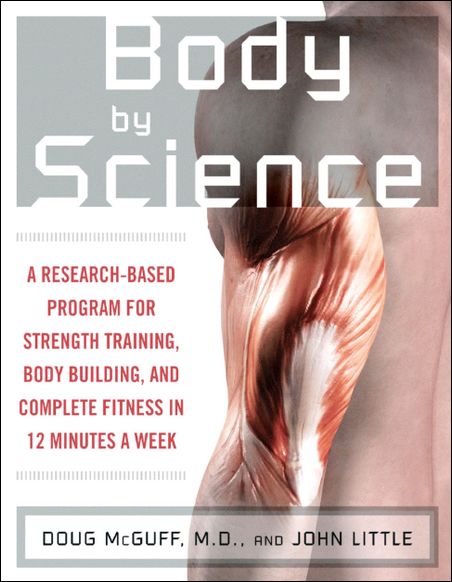
The "world-renowned expert" who did two hour-long interviews with "Dr." Duke is Doug McGuff MD, an emergency medicine physician from Seneca, South Carolina, and the author of this book published by McGraw-Hill:
In an attempt to answer that and other questions, I've submitted inquiries to Rodale Books and McGraw-Hill. I'll report the results in a future Sidebar item.
The study tested whether or not a modified version of the Heimlich
Maneuver could stop an acute asthma attack....The 67 children who
participated were between the ages of six and 16....
"Since at least 1996, based on dubious evidence, my father has claimed
that the Heimlich Maneuver can stop asthma attacks, but asthma experts
have expressed strong doubts," Peter Heimlich said...."A couple weeks ago, I sent inquiries to Queen Elizabeth Hospital and to Donville Inniss, the Barbados Minister of Health, asking for the name of the IRB and when the (Ministry of Health's) Ethics Committee approved the study," Peter Heimlich said. "I haven't received any answers."
Professor Anne St. John accepting Distinguished Community
Service Award from Steve Blackett, Barbados Minister of Social Care, Constituency Empowerment and
Community Development, June 2012 (source)
The Barbados study was conducted by a team of researchers led by respected paediatrician, Professor Anne St John.
In an email to this newspaper, she stated that the study did receive approval from the local Institutional Review Board; that no harm was done to any of the 67 children who participated; and that the Ministry of Health was carrying out an investigation into the matter....
The Sun article didn't include the name of the IRB or the name of the Ministry of Health official who's in charge of the investigation.
Also from the Sun:
(Peter Heimlich says that his father) contributed US$1000 to the Barbados study....
To be precise, in response to an inquiry I received from Ms. Bradshaw, I wrote her that, based on documents in UC's Henry J. Heimlich Archival Collection, the Heimlich Institute (not my father) had contributed $1,000.
Also note his mentioning additional funding from Rotary. (More about that in a future item.)
Finally, also from the Sun:
(Peter Heimlich)
said he had evidence that in 1999 his father attempted to conduct a
similar asthma study at Cincinnati’s Deaconess Hospital, but had been
turned down by the hospital’s Institutional Review Board (IRB).
On Nov. 19, the University of Cincinnati
received one of five inquiry letters sent to organizations that could be
linked to an offshore, potentially controversial experiment.
Peter Heimlich, son of Henry Heimlich - famous for the Heimlich
Maneuver choking rescue treatment - sent the inquiry letters in hopes of
obtaining more information on the experiment, which was performed on
children in Barbados, according to a study published in the West Indian Medical Journal in 2005.
...The study tested whether or not a modified version of the Heimlich Maneuver could stop an acute asthma attack....The 67 children who participated were between the ages of six and 16.
UC received one of the inquiry letters because Charles Pierce,
adjunct professor of psychiatry at UC, was involved with applying for loans (sic)for the study....
Barbados Minister of Health Donville Inniss, MP
Other organizations and individuals also received the
letters, including Rotary International, Queen Elizabeth Hospital in
Barbados, Cincinnati Children’s Hospital and Donville Inniss, the
minister of health in Barbados.
Records show that the study was funded by the Rotary Club of Cincinnati and the Heimlich Institute. (More about that in a future item.)
...Pierce and Anne St. John, a doctor in Barbados who was involved in the study, claim (an Institutional Review Board) approved the project.
...“A couple weeks ago, I sent inquiries to Queen Elizabeth Hospital and to
Donville Inniss, the Barbados Minister of Health, asking for the name
of the IRB and when the (Ministry's) Ethics Committee approved the study,” Peter
Heimlich said. “I haven't received any answers.”
(Dr. Pierce) said the modified version of the Heimlich Maneuver is
harmless, and is meant to empty the lungs and give relief to an asthma
patient and could prevent further asthma attacks.
Presumably Dr. St. John, the study's lead investigator, can clarify what sort of "modified version of the Heimlich maneuver" was performed on the child test subjects.
But here's what medical experts have said about the version of the treatment that my father has been hyping since at least 1996. (Click here for a Heimlich Institute press release.)
Loren Greenway,
administrative director of respiratory and pulmonary medicine for
Intermountain Health Care (Salt Lake City), and a nationally
certified asthma educator, finds Heimlich's asthma maneuver
physiologically unfounded and dangerous.
"Using the
Heimlich maneuver in an acute asthmatic condition...could actually
kill somebody," said Greenway.
The Heimlich maneuver will stop an asthma attack," (says Dr. Henry) Heimlich.
Heimlich also urges the maneuver be used on cystic fibrosis victims,
all claims that have stunned the medical community and major medical
organizations, which warn that the use of the Heimlich maneuver in those
situations could be fatal.
The American Lung Association asked Chicago respiratory expert Dr. John Shannon to speak with us.
"It shouldn't be used at all in asthma or in cystic fibrosis or any
other chronic inflamation disorder in the lung passages," said Dr. John Shannon,
Stroger Cook County Hospital.
"There is a good possibility of making a
person with asthma substantially worse."
To my knowledge, the only article about the treatment published in a medical magazine is Some Experts Are Skeptical About Reports That the Heimlich Maneuver Relieves Acute Asthma Attacks by Carolyn Gard from the February 1997 issue of Modern Medicine.
Click here to read the article, but regarding the Barbados study, this quote raises some reasonable questions:
(Asthma specialist Homer Boushey, MD says that he is) skeptical of studies that have not undergone peer review. Furthermore, he adds, the technique should first be tested on animals rather than humans.
Did the Barbados study undergo peer review? If so, by whom?
Has the "modified Heimlich for asthma" ever been tested on animals?
And has it ever been tested on adult subjects or just on the children in Barbados?
This week, NBC2 in Terre Haute, Indiana, broadcast a strong two-part story by investigative reporter Patrick Fazio about the Illinois Eavesdropping Act and the Annabel Melongo case, arguably the most extreme application of the controversial statute.
As NBC 2 has investigated for the past year and a half, citizens have faced felony charges for recording audio of law enforcement.
Now we've found an Illinois woman who's actually spent time behind bars because of the state's eavesdropping law.
Annabel Melongo was arrested and jailed for more than a year and a half for recording her conversations with an on-duty law enforcement official.
For the first time ever, Melongo is talking about being locked up for recording possible government corruption.
The first segment also reported that the eavesdropping case grew out of previous charges filed against Melongo in 2006 for allegedly destroying computer files of the Save-A-Life Foundation (SALF).